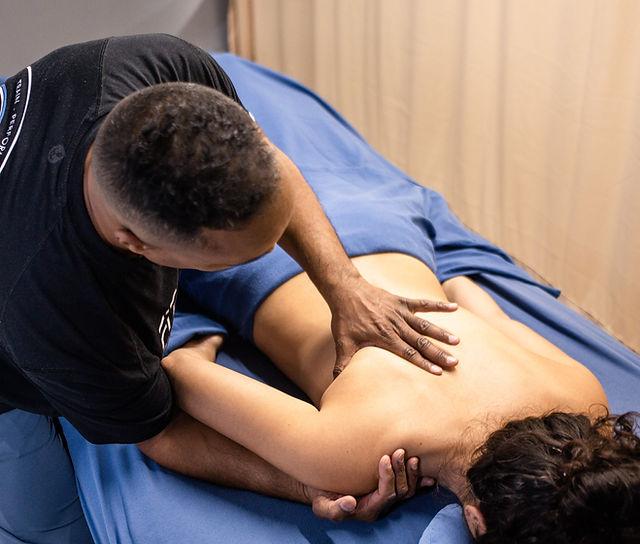
Myofascial release is a hands-on therapy that targets the fascial network — the connective tissue that surrounds muscles, bones and organs. The goal is to release adhesions and restrictions in the fascia to restore normal tissue glide, alignment and function. Techniques range from gentle sustained holds to more dynamic, movement-based approaches.
Benefits in a manual massage therapy session
Reduces pain and muscle tension by addressing fascial restrictions rather than only the muscle.
Restores mobility and range of motion in the neck, jaw, shoulders and spine.
Improves posture and movement patterns by releasing restrictive fascial pulls.
Enhances circulation and lymphatic flow, supporting tissue health and recovery.
Decreases frequency/intensity of tension-type headaches and TMJ discomfort.
Complements whole-body massage work for longer-lasting results and better functional outcomes.
Common methods and tools used
Dynamic myofascial release: movement-assisted techniques that combine active or passive motion with targeted fascial holds to retrain tissue glide.
Sustained manual holds (classic myofascial release): gentle, prolonged pressure to allow fascia to soften and lengthen.
Trigger-point and ischemic release: focused pressure to deactivate painful nodules within muscle and fascial tissue.
Cupping (including light facial/mini or silicone cups): controlled negative pressure to lift tissue, increase microcirculation and support lymphatic drainage—often used dynamically (gliding cups) to mobilize larger areas.
Gua sha / scraping tools: smooth-edged strokes to mobilize superficial fascia and stimulate circulation (used gently on sensitive areas).
Instrument-assisted soft-tissue mobilization (IASTM): ergonomic tools for precise fascial work on shoulders, forearms, calves and other areas.
Rollers and balls: self-care or therapist-assisted tools to apply sustained pressure and movement to specific fascial lines.
Lorem ipsum dolor sit amet, consectetur adipiscing elit.
Neuromuscular therapy is a specialized form of massage that targets the root cause of pain rather than just providing temporary relaxation. Unlike a typical massage where pain often returns, we assess your specific issues, identify trigger points and muscle dysfunction, and create a personalized treatment plan to deliver lasting relief and proper healing.
Our therapy effectively addresses a wide range of conditions including chronic back, neck, and shoulder pain, sports injuries, post-surgery recovery, tension headaches, poor posture, sciatica, muscle tightness from prolonged sitting or driving, and limited range of motion. If you're in pain, we can help.
The number of sessions depends on your specific condition and goals. Many clients feel significant relief after the first session, while chronic issues may require a series of 3 to 6 treatments. During your initial consultation, we'll assess your needs and recommend a personalized plan tailored to your recovery.
Our standard sessions range from 90 to 120 minutes, depending on the treatment type and your needs. Your first visit may take slightly longer as we conduct a thorough assessment to understand your pain points and create a customized recovery plan.
No referral is needed! You can book your session directly through our online scheduling system or by calling us. We make it easy for you to start your recovery journey whenever you're ready — no doctor's note required.
Wear comfortable, loose-fitting clothing that allows easy access to the areas being treated. You'll be draped with sheets or towels throughout the session for your privacy and comfort. We recommend avoiding tight jeans or restrictive outfits so you can relax fully during treatment.